Level Design In Abstract Methodology

Saturday, February 19, 2011

0 comments
This essay reflects on many concepts that currently reside in or out of game development disciplines, but are being strung together here as an abstract and philosophical methodology when conceptualizing and constructing virtual game spaces.

Inspiration:
There's nothing like a good trip abroad to stimulate the senses into a descent towards wonder and perhaps some much needed inspiration. Strolling through the Suzhou Museum, China I began to reflect the organic and abstract approaches a notable architect will make before diving into a design. In this case it was the Chinese American architect - Ieoh Ming Pei (of the glass-and-steel pyramid fame for the Louvre museum in Paris) who drew inspiration at an early age from the gardens at Suzhou. While reading about all the nuances he factored into shaping the museum, I dwelled into level design practices. In my experience level design has usually been about a set of procedures, often times pumping out maps like an assembly line - excluding the organic aspects an architect or even a character artist/animator would factor into the equation. We're often so preoccupied about spaces being shaped according to the rules, content, and mechanics of game which of course are certainly fundamental priorities - but would it hurt taking a side methodical step towards ownership while brainstorming a problem?  Perhaps the most interesting aspect of architecture is its capacity to dream, to imagine options that have never existed before. The use of the word "option" as applied here is an alternative to the word "solution" which typically implies the end result. As designers and developers we should gather empirical observations that offer playful, tentative-meaningful answers, instead of cold, hard end results. Just as a character artist dives deep into the psychology of a character, a level builder can also embody the essence of a space, in hopes of extracting new user experiences.

Suzhou Museum


Suzhou Garden

Levels Are Actors Too!
Aesthetically speaking, game characters have certainly come a long way. In fact, it's the realistic normal mapping ones that often catch a non gamer's immediate impression. Though, setting is equally a key role player to lead characters. The Himalayas are to Nathan Drake as Mt. Olympus is to Kratos as the underwater utopia of Rapture is to Jack. Levels are often the place-setting for mood or tone and come to life through flow, npc population, set pieces, and interactive objects that all aid in dictating the pacing. In turn, spaces are very capable of leaving lasting impressions based on difficulty as well interesting encounters; it can imply a malign presence at work without having any direct dialogue. For me personally, reaching lo-res pixilated points of interest were always a motivating factor and fulfilled quite a sense of accomplishment even back to the old 8 bit Nintendo days. As the tools and tech have advanced so have dynamic methods for staging levels and events which is one many great advantages that interactive games have over the constraints of reality.

By introducing "natural" phenomena, such as water, mist or light, into an artificial setting, a city street or an art gallery, installation artist - Olafur Eliasson encourages the viewer to reflect on their perception of the physical world. This moment of perception, when the viewer pauses to consider what they are experiencing can be described as "seeing yourself sensing". The Weather Project made it's debut at the Turbine Hall at the Tate Modern in October of 2003.  Using a semi circle in contrast with mono frequency lighting to resemble a full setting sun while a giant ceiling mirror and mist created a surreal effect."Eliasson transformed the space with little more than smoke and mirrors - an act of architectural magic."

The Weather Project - The Tate Museum


Concepts like The Weather Project can lead towards rethinking the way we approach shaping game spaces. I'm not implying reusing the same setup verbatim, but rather consider new possibilities of stirring aesthetic sensations while challenging player's expectations in thought provoking ways, even within a problem solving framework.

To illustrate the point further below are a few existing examples that in some way are exploring interesting mechanisms to enhance game aesthetics.


Flower - To accentuate the sense of flight through the landscape, Flower uses a suggestive fish-eye lens effect. 


Limbo - The use of grayscale in a 2d plane gives a hidden layer of  dimension that helps contrast various aspects of environmental puzzle solving.


Heavy Rain - The concept of the Added Reality Interface invites the segment to be it's own standalone gameplay component.


Prey - Had one of the earliest forms of the 3d portal concept and also had an instance that required players to rotate an entire room several times, by firing projectiles at a gravity switch in order to solve a physics based puzzle.


Ninja Gaiden Black - One small moment near the end creates a pseudo optical illusion as Ryu crosses a giant rib cage bridge that flips the critical path along with the background.


Who Cares?
As the game landscape has shifted toward a William Gibson version of the Wild West, the urgency to give players meaningful "options" is greater than ever. There is no better place to start than with the levels, exteriors and interiors we shape which hold some of the greatest potential for giving players interesting decision making obstacles and new user experiences. Factoring the architectural abstract and philosophical methodologies of your levels can provide aid in stimulating the creative process and perhaps can add input to the aesthetic polishing phase. Levels and environments have a tremendous amount of game mechanic potential. On that same note, it can certainly be a taunting task of convincing studio bureaucracy of what might be considered too unorthodox, experimental, or risky. Therefore, it is equally important on the developers part to harness the tools and introduce the proper vernacular to support your views. Earning trust is crucial since design typically is an iterative process which does not yield flawless first pass executions. But for all you indie developers out there, the momentum is at your finger tips especially in the smart phone, tablet, and digital content spaces.

Put Your Money Where Your Mouth Is!
For the next installment of this essay I'll be compiling an actual example of putting these thoughts into practice. But to make this exercise a bit more amusing, it would also be ideal to gather input from you, the reader. Sharing some of your aesthetically unique gaming moments or observations in architecture, installations, film etc... The point is to stimulate conversation as means of exploring "options".

Phantogram

Thursday, January 27, 2011

1 comments


 I randomly rediscovered an image set of Phantogram while digging around for reference on a side project. The gig was almost a year ago at a little indie record store in Hillcrest, San Diego. I started tweaking a few shots that were not used for the final set and came out with the 3 images above. Not to too sure about the results, but it was definitely fun reminiscing.  

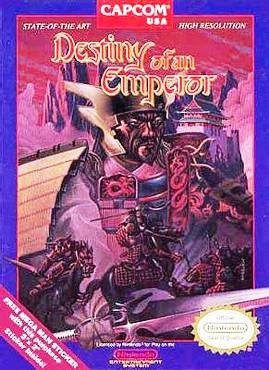
Destiny Of An Emperor

Friday, January 21, 2011

1 comments


I'm frequently swarmed with possibilities and kinda caught off guard when someone ever springs up the question "What is your favorite video game?" I can't help but want to side step the question, but where to begin? So many great selections from nearly each console, computer, and arcade generation. Though, on a recent phone interview I was able to respond both clear and intrinsically "Destiny Of An Emperor".  To give a little bit of context - I had never played D&D, had no concept of an RPG, let alone any knowledge of the Chinese Dynasty period drawn by Romance of The Three Kingdoms at age 10. This game hit the U.S. in 1989, before the western release of Final Fantasy and was also my first taste of turn-based, strategic combat.

The game's theme is really driven by its historical resurgence (which it deviates frequently) that makes for some epic story telling components like a cast of memorable abilities, weapons, and characters complete with a suspenseful narrative. Perhaps the best quality was the "accessibility" of the gameplay with an absence of unnecessary complexity, just a very well balanced experience that allowed enjoyment for learning a gamesystem that matches facing new challenges.  You persistently manage five generals that represent an army of soldiers - level up your generals = more soldiers which also requires managing "tacticians" who represent the ability casting element.  Though that game does lack some visual feedback in the form of particles during combat which would have really accented the immersion factor. Luckily that classic CAPCOM signature music picks up the slack for all the lose ends.

So why my favorite game of all time? Like a book Destiny Of An Emperor manages to streamline the imagination towards materializing something lager than life with such minimal presentation. The impression left behind was a grounding foundation for many games in the years to come. Know your roots!

Circuit Tree - Remixed

Wednesday, January 19, 2011

1 comments


Went back to tweaking the source composite of this image and decided to try a somewhat minimal approach with only using a busy circle as a focal point. I'll most likely be trying a multidimensional finish that entails using assorted material to overlay on all the circle elements.

Journey To Silius

Sunday, January 16, 2011

0 comments


Every so often I get those nostalgic 8-bit game music flashbacks that manage to relentlessly loop until that audio itch is scratched via Youtube. Journey To Silius probably had the most underrated NES game score ever conceived. Gameplay was your standard run and gun sidescroller, but the music was such a motivating component of the experience that it was simply a goal reaching other levels just to hear the next set of tunes. The tones a very comparable to the first stage of Double Dragon and even resonate some of the same energy of stages in Mega Man 2 including others in the Capcom library.

The selections above start with the title theme through the second stage (a personal favorite). Enjoy!

"The game was noted for unusually strong music (composed by Naoki Kodaka) for an 8-bit title. The NES DPCM channel was used for sampled bass tones, a choice which was unusual for NES compositions and lent the soundtrack a much thicker timbre.

The sound effects also showed up before in the past sunsoft games, specifically Blaster Master and Fester's Quest."

Little Dragon

Friday, January 14, 2011

0 comments


 Last week I had the last second opportunity of interviewing drummer Erik Bodin of the Sweetish synth/indie rock band Little Dragon. We met up with Erik in Silverlake, Los Angeles where he happily greeted us with his luggage in hand as he literally had just been picked from the airport. Just moments after shaking his hand, the band manger rings me saying he has to pick up the keyboardist, then asking if I could drop Erik off at a his hotel afterward. I thought of that request being a bit forward, but honestly didn't mind, so off we went to Secret Headquarters just around the corner to conduct the interview. I'll have that interview up later, but here a few preview images as well as some shots from their gig.


You can see the full image set at: http://thescenestar.typepad.com/ss/little-dragon-echoplex.html


Nosaj Thing vs. Aalto

Sunday, January 9, 2011

0 comments

More minimal pleasing eve candy from Nosaj Thing's camp, a collaboration with Prague based V.J. and motion graphics designer "Aalto".


Untitled Piece

Thursday, January 6, 2011

0 comments

Source taken in Shanghai, 2009.

work in progress

Ashley Wood

Wednesday, December 29, 2010

0 comments
About a year or so ago, Karen and I strolled into The Secret Headquarters in Silverlake, LosAngeles. The shop can be described as a sort of grown up version of a traditional comic bookstore, only made to be a bit on the hip side of the spectrum. As I paroused the shelves and displays, a distorted impressionistic soldier book cover caught my curious yet dumbstruck gaze.

Dos Tarino by Ashly Wood
My brain couldn't quite map or find any frame of reference where to place these wild yet very evocative illustrations.  The unnecessary Catholic guilt managed to creep up once the sexual themes started appearing which sort of sent me into a conclusion of "this must be all perverted content". But the color schemes, anatomy distortions, and other line work were so technically sound that I managed to put my prejudices aside and bought the book.


 Ashely Wood is the dreamer of this sexually charged mecha world. It's definitely worth giving his work a glance, and perhaps even picking up one his pieces or books.

Cina Associates

Tuesday, December 28, 2010

0 comments


-Glider by The Sight Below-


In the last several years the indie elctro label, Ghostly International has managed to pull in a slew of new, not so DJ centric music acts and with that comes the great album art work that ties into the branding and identity of these soundscapes. Which brings us to "The Sight Below" - a solo Seattle based ambient electronic act that managed to grab my attention in early 2010 with it's repetitive tempo beats and dreamy guitar riffs.  At the same time I was equally pulled in by this organic album cover done by Michael Cina Associates - "an innovative and unconventional design and graphic studio. Our focus is to go beyond traditional studio work by integrating creative professionals with diverse backgrounds and talent. Every project is treated uniquely based on the special needs of our client – one solution does not fit all. We strive to give our clients quality solutions that they can’t get anywhere else." 

I suppose I'm drawn into the piece because of the organic-terrain esque nature which is certainly a departure from the print design found on most covers of this and similar genres.

Oblique Strategies

Saturday, October 23, 2010

0 comments
Reading across an entry from Brian Eno's diary referencing Oblique Strategies "Don't be afraid to use your own ideas"... Kind of sounds like naive optimism, though the actual exercise is actually pretty thought provoking. The methodology seems to be geared towards musicians, but it definitely has the same brainstorm use outside the music framework.


Oblique Strategies is a deck of cards, about 7×9 cm in size, supplied in a small black box labelled “OBLIQUE STRATEGIES”. The cards themselves are black on one side, white on the other, and have obscure, cryptic aphorisms printed on the front in small letters.
They are intended as a creative tool for musicians and were developed by legendary producer Brian Eno and artist Peter Schmidt - the pair originally both came up with the same idea independently in 1975, and joined forces to make it a reality. Eno’s own description explains the idea very well:

“The Oblique Strategies evolved from me being in a number of working situations when the panic of the situation – particularly in studios – tended to make me quickly forget that there were others ways of working and that there were tangential ways of attacking problems that were in many senses more interesting than the direct head-on approach. If you’re in a panic, you tend to take the head-on approach because it seems to be the one that’s going to yield the best results Of course, that often isn’t the case – it’s just the most obvious and – apparently – reliable method. The function of the Oblique Strategies was, initially, to serve as a series of prompts which said, “Don’t forget that you could adopt *this* attitude,” or “Don’t forget you could adopt *that* attitude.”

A Very Subjective Post Gameplay Rant

Wednesday, September 8, 2010

0 comments
A fellow game developer and good friend was kind enough to lend me a small surplus of games I had yet to test drive. Among those was Transformers - War For Cybertron, which was given a whirl since it had received fair critical reception. The game's level design and set pieces matched with a nice blend of scope, scale, and reverence to the original series, immediately sold the immersion factor for the first couple of hours of gameplay. In addition, tapering level flow included movers, ramps, catwalks, open vistas, narrow corridors, back and foreground elements added a sense of form and function to the game landscape - holy shit this is Cybertron - very satisfying spatial psychology! Then.... monotonous waves of NPC's rob the sense of virtual sensation from mastering an interesting game system. Thus, the challenge dulls creating a bit of immersion breakage. I suppose this is a choice between creating play options vs. developing complex AI (time constraints probably affected this). For contrast, it would have been nice to see a push towards integrating a few environmental puzzles or interactions especially with such great set pieces.


Transformers - War For Cybertron

Disappointingly, I had recently crossed this same path while playing God of War III . Design wise the game does not manage to retain quite the impact like the opening Mount Olympus sequence while small bugs like fidgety camera splines, a flawed rhythm based mini-game, and flat puzzling solving instances all contributed towards disappointing immersion breakage. I understand this title has an established design formula and is sticking to what it does best (hack and slash swarms of NPC's), but I can't help but expect something - a breath of fresh design ideas in this age of technological might. Though, the isometric Echochrome eqsque sequence was a noble attempt in that direction! However, the game did manage to nail the story telling components every step of the way - a very signature trait of this franchise. I had to ask myself "is this a masterpiece or game of the year material?" My expectations were riding high on this one.

God of War 3

While Playing Limbo it became evident how to compare and contrast between the overall experience from the aforementioned titles. Though it may not be suitable to compare apples to oranges, but the point I'm trying to etch is that a well established intellectual property is clearly not a means towards neglecting potential new aspects of your current design architecture (no deep wisdom there). Using various nuances to leverage mechanics and objectives can be an ideal solution towards straying from dull monotony. Good level design exposes subsets of a system which, can be easily added up to help forge gameplay cohesion. Little Big Planet succeeded quite well in that respect- a variety physics based problem solving adds character to puzzles while allowing spaces to feel less static which implies organic spatial relationships. In turn, these types of characteristics begin to embody the essence of game design cohesion, fluidity, harmony, and balance that create an arch of mastery fit for improvising. When these elements gracefully fall into place the game ignites that nerve, an emotional surge of ownership.

Limbo

The wife and I enjoyed Limbo because of its ability to promote thought provoking problem solving through mood, timing, contrast, and foreshadowing. These traits also applied towards the the gray-scale visual language which add an additional layer of wonder and awe to the mood category which summons that emotional intimacy you hope for in most interactive experiences. Oh yeah, and the game manages to exploit dark humor through dying in a variety of ways. Design wise the game demands learning through failure, often times repetitively which can almost be closely tied into a game like Portal.

So... sure button mashing and relentless poundings of NPC's can have its merits too. I'm a firm believer in having a healthy blend of content for any type of occasion, mood, or curiosity. Surly one does not eat the same kind of food, read the same kind of books, or watch the same movies everyday- do they?

Visual Music Collaborative 2010

0 comments
More food for gaming thought. The overlap of interactive music/sound based apps continues to find itself gravitating towards game design architecture. This five day workshop at the Eyebeam art and technology collective in New York was held in collaboration with Ghostly International as a means to explore visual-musical experiences. These explorations are intended to create a "framework" that could perhaps be built upon in future instances.


Visual Music Collaborative 2010 from Aaron Meyers on Vimeo.

Sougwen - Drawing Jam

0 comments
I happened to stumble across the work of illustrator, Sougwen through a retweet several weeks ago. Her work is quite remarkable and lends itself toward very conceptual and organic forms that would be ideal for translating over to some sort of interactive experience. I'm currently exploring a design treatment for a psychological-therapeutic app. that allows some exercise of self expression wrapped in a seamless, fluid manner. Needless to say watching this segment does wonders for the imagination.


Sepalcure - Every Day of my Life from sougwen on Vimeo.

School of Seven Bells

Tuesday, September 7, 2010

0 comments
A great recent stripped down acoustic session of the new album "Disconnected From Desire". This session really demonstrates the solid fundamental musical abilities of this catchy little band.

Be sure to also check out my recent photos from their L.A. stop -

Old Skool VS. New Skool

Sunday, May 9, 2010

0 comments
Taken at the Suzhou museum- a comparison between traditional ink nature and contemporary calligraphy.


Where To Next?

0 comments
I considered turning 30 as a sort of crossroads towards the second half of my life. The thought had surfaced to examine a self reflection of where I've been and where I plan to aim towards next. Continuing to accumulate some type of mental stimulation and growth by some legitimate means seems like the optimal and proper route to go. Does that mean going back to school? Does that mean learning a new skill set? Does that mean getting involved in small projects? Does that mean making more money? It could quite possibly mean all of the above, but while assessing this this fork in the road, something had occurred to me. Being over ambitious might not be the answer to achieving a genuine sense of happiness and contemptment which I feel first and foremost should be a priority.

I've been incredibly lucky over the past several months of having the opportunity to hear some very reputable thinkers express their views stemming from art, music, design and tying those into life experiences. I almost consider these encounters as a secondary education since the insight shared is worth it's weight in deep wisdom. Many times their work is an underlying subtext or exercise of self reflection in order to ask questions which lead to creating results in their purest forms. It almost sounds like new age spirituality bull-crap, but it resonates relative and honest tones to many of my creative functions and forms of problem solving.

The work of Underworld & TOMATO have been one the key signifier-s to view life from a different lens and question my own goals as an individual. Long story short, their influence got me off my ass and into focus with a new sense of self and motivation when I was just trudging along aimlessly in life . In August of 09, I conducted a phone interview with Underworld front man Karl Hyde, needless to say it was a nervous experience, but also a pleasant chat with plenty of simple redeeming insight.

"Collaborating without ego" "You've got to be hungry" "Never stop searching"


Great short interview with John Warwicker of TOMATO and close friend to Underworld. His philosophy is very grounding in the high-level but really does dig deep in execution.


I recently picked up his book "Things I Have Learned In My Life So Far" which happens to be a collection of images, phrases, and personal observations made into creative installations. Sagmeister is in search of peace and happiness while trying to balance a work life that doesn't overstep it's boundaries to the point of distorting a clear perception of human values. His work is honest and often times equally playful toward an angle of performance art. The book's preface had several contributors, one that stood out was psychologist, Daniel Nettle of Newcastle University, UK. Nettle Broke down Sagmeister's work into three positive points:

Social relationships - they ground and secure us towards solving practical and material problems. We need to be reminded that "Helping other people helps me".

Importance of Feeling a sense of Mastery - "Actually doing the things I set out to do increases my overall level of satisfaction" Nettle had documented that lower income people felt much happier and mentally healthier than higher income individuals who felt no sense of control.

The Place of Self Reflection Happiness - "Keeping a diary supports personal development" It is the act of reflection that allows us to make sense out of and balance our multitude of thoughts and feelings.


A small excerpt from a recent TED lecture... sums up the gist of his latest book


Dear lord, where to begin? Eno has always intrigued and equally annoyed me, but I've gotten to respect him more while reading his diary entries "A Year With Swollen Appendices". Through the lens of this subjective book is a wealth of insight and shared experiences ranging from a broad range of topics, encounters, traveling, and creative processes. Must have taken some substantial level ease to allow such exposure of his most vulnerable and weak moments.


We had caught his recent lecture at Cal State Long Beach in support of his recent light installation 77 Million Paintings. Eno discussed a concept of allowing yourself to "surrender" in order to achieve results you'd otherwise be constrained towards. I found it amusing that he used a surfing analogy to compare and contrast his point.


In conclusion having accomplished goals while paying close attention to life's subtext and effecting those around you in a positive manner just might be a decent start to keeping sane.

China Part 2

Thursday, February 18, 2010

0 comments


This next installment of China images is seen through my misplaced perspective as a tourist, foreigner, and curious observer. Most of these observations were fueled by the simple mundane visual language that may appear on a garden wall, the side of bus, shadows, silhouettes, or a fascinating looking individual. Basically, these are the scenes most people would not necessarily think twice about, while being immersed in their daily automated routines. China retains a duality of maddening and beautiful elements which are cross pollinated from it's ancient culture to the remnants of the Cultural Revolution, and now to the contamination of commercial western values.

The mosaic above is a condensed time line of highlights spread throughout a three week period.

Two themes that are missing from this series are Colonel Sanders and construction cranes. Both these symbols are very abundant in modern day China and hold a substantial amount of subtext therefore, they need their own separate presentation to justify their stories.

Karen's hometown "Suzhou" has an array of classic gardens dating back hundreds of years.


Suzhou is the birthplace of the Bonsai tree.


The Suzhou garden walls are seeping with rich textures.


Classic interior design and architecture.


Tea house mah-jong showdown.

Kicking it old skool.

This bright display resided inside a Walmart esque shopping building callled "Tesco".


The exterior bus art reminded me so much of early 2000's motion graphics-print design.


This gal stood out like a peacock in heard of black cats, how could I not photograph her?


A very typical sight, a biker piling as much cargo as possible for cross town transport. Very rad.


Concrete jungle, a view of Shanghai at dusk from inside a warm office building.


This dude reminded me of one of those Final Fantasy Shinra thugs.


At rush hour, the subway turns into one massive of organism of people, unbelievable. I've never seen this amount of sheer mass crammed into one space here in the States.


Tranquility... this Shanghai subway entrance is completely vacant and worth documenting as such a rare moment.


Walking up the Shanghai train station ramp exit is a very surreal feeling.


This glass ceiling is also a floor for the surface dwellers who walk above.


The freeway lit like segments from Tron.


Shanghai signage implying the Blade Runner vibe.


Snacking while waiting for the train back to Suzhou.


Had to sneak one KFC pic. "Alright mom! Hand over the wings and nobody gets hurt!"


Yes, the air is so polluted that it turns sunset into a yellow tint.


This amusement park is still under construction and posts American families on its sign adverts.


Reflection or liquid mirror?


Loved this ceiling fixture.


Suzhou museum, architecture with design and form-giving at its best.

The museum's sunlight entries allow organic projections throughout the building.


Alien calligraphy.


This grandma has probably lived through some intense periods in Chinese history.


This guy sells yams and chains smokes above your potential snack.


MMM... nothing beats street meat (or squid) from a vendor wearing a Hello Kitty t-shirt. Behinds the scenes I was being harassed by a monkey while trying to nail this shot, not cool.


They say communism is the still the foundation of the Chinese government, but capitalism is quite apparent everywhere you look.


Sweet ride.


Chinese gondolas waiting to charm visitors up and down the murky canals.


This is the neighborhood Karen used to run around as a little girl.


Chinese Sex and the City chicks.


This chick was one of the few hipsters I ever spotted.


Very chill old dude.